
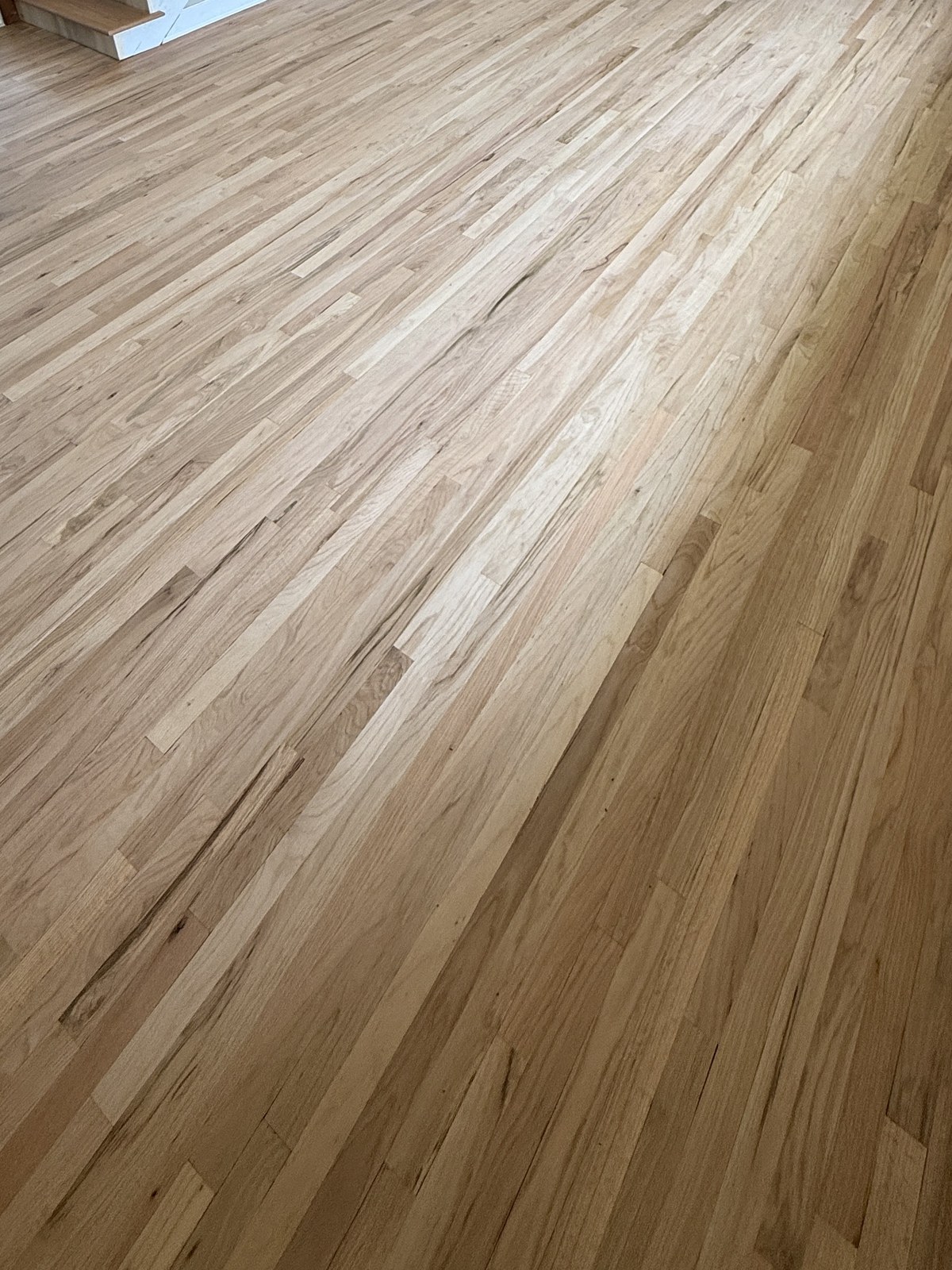
Every year, once the heat comes on for good, we hear from homeowners who notice thin gaps opening between their hardwood boards. It can be alarming, but in most cases it's a normal part of how real wood behaves in a New England home. Here's what's going on and what you can do about it.
Key Summary
- Wood shrinks as indoor air dries out during the heating season, and expands again in humid months.
- Small, even gaps that close up in summer are usually normal seasonal movement.
- Large, uneven gaps, cupping, or loose boards are worth having checked.
Why It Happens
Wood naturally takes on moisture from the air and gives it back. In summer, Connecticut humidity causes boards to swell slightly. In winter, heating systems dry the air, and boards give up moisture and shrink. When each board shrinks a little, small gaps appear between them. Wider boards move more than narrow ones, so wide-plank floors tend to show more seasonal gapping.
How to Limit Seasonal Gaps
- Run a humidifier during the heating season to keep indoor humidity more consistent.
- Many flooring manufacturers recommend a range of roughly 35 to 55 percent relative humidity.
- Avoid big thermostat swings, and keep heat vents from blowing directly across the floor.
- Use a hygrometer to see what your home's humidity really is.
We covered year-round care in how to protect your hardwood through Connecticut's seasons.
When to Call Us
Gaps that are unusually wide, appear in just one area, or don't close up when the weather warms can point to other issues, such as moisture from below, loose fasteners, or damage in the subfloor. Cupped or crowned boards, squeaks that get worse, and boards that move underfoot are also worth a look. Our floor repair service covers these problems, and many can be fixed without replacing the whole floor.
Engineered Hardwood Moves Less
If you're planning new floors and want less seasonal movement, engineered hardwood is built with cross-layered plies that resist expansion and shrinkage. Our post on engineered vs. solid hardwood explains the trade-offs.
What Not to Do
It's tempting to fill winter gaps with wood filler or caulk, but that usually backfires. When the boards swell again in summer, the filler can be pushed up or cause the boards to press against each other, which may lead to cupping. In most cases, seasonal gaps are best left alone; they close on their own as the humidity returns. If gaps stay open year-round, that's a different situation that may call for a repair. When you're not sure, a quick inspection can tell you whether the floor is simply responding to the season or whether something else is going on.
Have Questions About Your Floors?
If you're not sure whether what you're seeing is normal, we're happy to take a look. Book a free in-home estimate in Tolland, Coventry, or anywhere we serve.